
The job title alone doesn’t tell you how much spreadsheet work a role involves. Entry level spreadsheet data entry jobs can range from entering and checking records to processing larger data sets or maintaining specialized information, with the exact duties shaped by the employer and team workflow.
An assistant, clerk, processor, or specialist may all work with spreadsheets, but their tasks, handoffs, accuracy expectations, and experience requirements can differ. Understanding those differences helps you focus on openings that fit your skills instead of ruling yourself out based on the title alone.
This guide explains what each role typically involves, which spreadsheet and data-handling skills employers may expect, and how to interpret entry-level requirements. Use the comparisons to identify responsibilities that match your experience and find entry level spreadsheet data entry jobs that fit your current skills.
Key Takeaways
- Compare the actual duties, not just the job title, to see whether a role centers on data entry, record checks, processing, or specialized tasks.
- Some assistant openings call for accurate typing and 10-key skills, while entry requirements can vary between employers.
- Clerk and specialist postings may ask for prior experience, but requirements differ; read each listing for the specific threshold.
- Use the role descriptions to narrow your search and focus on openings that match your spreadsheet skills and experience.
Data entry assistant roles
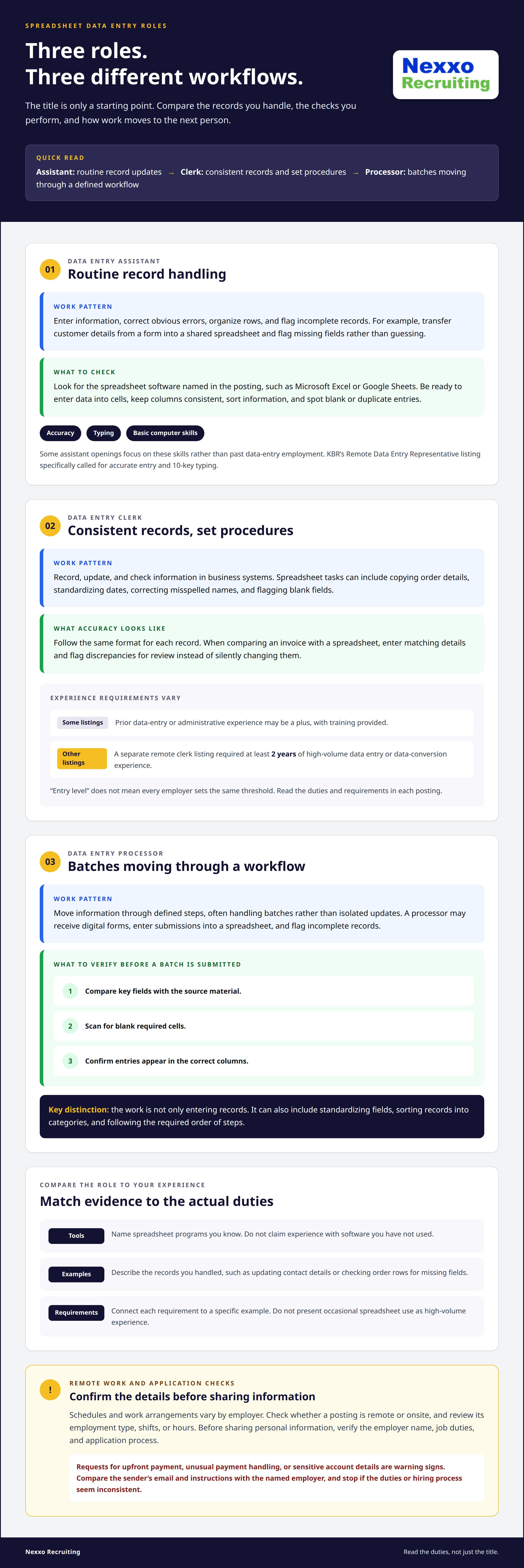
A data entry assistant supports routine record handling and spreadsheet updates. Typical tasks include entering information, correcting obvious errors, organizing rows, and flagging incomplete records for review. For example, an assistant might transfer customer details from a form into a shared spreadsheet and flag missing fields rather than guess.
Remote assistant openings exist, and some employers also assign this work onsite. A remote data entry assistant listing was posted 10 days ago. KBR’s Remote Data Entry Representative listing required accurate entry and typing, including 10-key typing. The work arrangement depends on the employer’s workflow and how staff access the records.
Spreadsheet work may involve basic data entry, while roles involving specialized records may require different skills. Check the posting for the software used, such as Microsoft Excel, Google Sheets, or another system. Be prepared to enter data into cells, keep columns consistent, sort information, and spot blank or duplicate entries.
Entry-level requirements can focus on accuracy, typing, and basic computer skills rather than past data-entry employment. KBR’s listing specifically called for 10-key typing. An employer may also value office, customer service, or administrative experience because those jobs involve handling records and following procedures. Match your examples to the stated requirements; don’t claim experience with software you haven’t used.
Build your resume around relevant tasks. Name spreadsheet programs you know, describe the records you handled, and give a specific example, such as updating contact details or checking order rows for missing fields. Include typing or 10-key skills only if you can demonstrate them. Keep the resume focused on accuracy, organization, and reliable follow-through.
Schedules and employment types vary by employer. A posting may describe full-time, part-time, temporary, contract, or permanent work, and specify set shifts or flexible hours. Read the schedule and work-location details before applying to make sure the arrangement suits your availability.
Before sharing personal information, review the employer’s name, job duties, and application process. Requests for upfront payment, unusual payment handling, or sensitive account details are warning signs. Compare the sender’s email and application instructions with the named employer, and stop if the duties or hiring process seem inconsistent.
Data entry clerk roles
A data entry clerk typically records, updates, and checks information in business systems. Spreadsheet tasks may include copying order details into rows, standardizing dates, correcting misspelled names, and flagging blank fields. The role often follows set procedures, so consistency matters as much as typing speed. For example, a clerk entering customer records should use the same format for every phone number and address.
Clerk openings vary in their experience requirements. One Data Entry Clerk listing from Prime Gate Analytics said prior data-entry or administrative experience was a plus, while training was provided. That kind of posting may suit applicants whose experience comes from office support, reception, or record handling rather than a formal data-entry job. A separate remote clerk listing required at least 2 years of high-volume data entry or data-conversion experience, showing that “entry level” does not mean every employer has the same threshold.
High-volume work usually involves processing a steady flow of records while maintaining accuracy. A clerk might compare an invoice with a spreadsheet, enter matching details, and flag discrepancies for review. Data conversion can involve moving information between formats or systems. Read the duties closely: entering records differs from checking source documents, correcting inconsistencies, or converting data.
Remote data entry clerk openings are available, including a listing posted 14 days ago. Remote work requires clear digital handoffs, such as recording which rows need review or marking a completed batch. In an office, clerks may instead coordinate directly with coworkers who provide forms or resolve errors. The posting should identify the work arrangement and the records involved.
Assess your fit by matching each requirement with a specific example from your background. If you used Excel to update inventory, describe the fields you maintained and how you caught missing entries. If a role requires high-volume experience, don’t suggest occasional spreadsheet use meets that standard. Focus your application on relevant tools, record types, accuracy checks, and training you’ve completed.
Data entry processor roles
A data entry processor moves information through a defined workflow, often handling batches of records rather than isolated updates. For example, a processor may receive digital forms, enter each submission into a spreadsheet, and flag incomplete records for review. The work centers on completing each step in the required order and keeping records usable for the next team.
A remote data entry processor listing was posted 7 days ago. That listing shows why job titles can signal a specific workflow, but the duties still matter most. Look for details about source documents, spreadsheet entry, record updates, and quality checks. A posting that mentions processing applications, for instance, may involve moving information from forms into a tracking sheet and marking each item’s status.
Processors may standardize fields, sort records into categories, and check entries against source material. A spreadsheet tracking customer requests could include columns for request date, account name, category, and status. If a source form omits the account name, follow the employer’s procedure for flagging the gap rather than filling it in based on an assumption.
Accuracy relies on repeatable checks. Before submitting a completed batch, compare key fields with the source, scan for blank required cells, and confirm entries appear in the correct columns. For example, checking an invoice number alongside its date can help catch a row entered under the wrong record. Employers may outline these steps in the posting or during training.
To assess a processor opening, separate the main task from supporting duties. Note whether the role centers on data entry, document review, status tracking, or handling exceptions. Then match those duties to an example from school, volunteer work, or a previous job. If you maintained a spreadsheet for event registrations, describe how you entered attendee details, organized the list, and addressed missing information. This gives employers clear evidence of relevant workflow skills.
Data entry specialist roles
A data entry specialist may handle records that require closer attention to a particular subject, system, or process. For example, a specialist could maintain product details in a spreadsheet, check identifiers against source files, and flag conflicting entries. The title alone doesn’t define the level of responsibility, so consider the duties and experience requirements together.
Entry-level labels can still come with experience requirements. One remote data entry specialist listing required two or more years of related experience. A separate remote specialist listing was posted 2 days ago. These examples show why you should distinguish between a role’s title and its stated qualifications. Related experience might come from administrative work, records management, or regular spreadsheet tasks, depending on the employer’s description.
Specialist duties may go beyond entering information into cells. A posting might ask you to maintain consistent categories, review records for missing details, and resolve mismatches by following documented procedures. For instance, if a spreadsheet lists two different product codes for one item, follow the employer’s correction process instead of choosing a code by guesswork.
Review each posting for the systems and data involved. Look for named software, the records you’ll handle, and any quality-control tasks. If a role requires experience with a specific database, general spreadsheet familiarity may not meet that requirement. Instead, show where your past work involved comparable records, careful updates, or structured review.
Make relevant experience clear without overstating it. Describe a specific task, such as maintaining a contact list, reconciling inventory rows, or checking form entries. Explain what information you handled and how you kept it organized. A brief example gives employers more useful evidence than a general claim about being detail-oriented.
Use the posting’s requirements to decide whether a specialist position fits your background now or represents a next step. If you’re ready to compare remote openings, explore current role options and focus on the listed duties, tools, and experience criteria.
Nexxo Recruiting
Nexxo Recruiting helps you continue your search with listings for remote opportunities, including data entry roles. First identify whether assistant, clerk, processor, or specialist duties best match your skills. Then compare each opening’s spreadsheet tasks, experience requirements, work arrangement, and application details.
A clear match matters more than a familiar title. If you’ve maintained spreadsheets but lack specialized data experience, focus on listings whose duties align with work you’ve actually done. Review the requirements carefully and apply directly through the process provided in each listing.
If you want help finding a relevant opening, contact Nexxo Recruiting.
Take the Next Step Toward a Data Role
Choose a target role based on the work you can demonstrate, and let that focus guide your applications. If you’re pursuing entry-level spreadsheet data entry jobs, treat each posting as a practical fit: compare its stated duties with your skills, experience, and preferred work arrangement. A role that matches your current abilities can help you build relevant experience and clarify which responsibilities you want to take on next.
Nexxo Recruiting connects job seekers with remote opportunities through its listings. Use them to identify openings that align with your goals, then follow the application instructions for each position. Keep your search focused, describe your experience accurately, and refine your target as you learn which duties suit you.
Contact Nexxo Recruiting to take your next step toward a suitable opportunity. Your spreadsheet skills can be a starting point for meaningful work.
Frequently Asked Questions
What does an entry-level spreadsheet data entry job involve?
The work involves entering, organizing, or updating information in a spreadsheet or business system. A typical task might be recording shipment dates from delivery documents, then sorting rows by status for a team report. You may also follow field definitions, use approved formats, or flag unusual entries for review. The exact workflow depends on the employer and the records being managed.
Where can beginners find legitimate spreadsheet data entry job openings?
Beginners can find remote openings through Nexxo Recruiting’s job listings, which include entry-level roles with job details and direct application links. Review each listing for the employer, core duties, work arrangement, and application steps. Apply through the process described, and avoid opportunities that ask you to pay to access a job or submit an application.
What are common job titles for spreadsheet data entry work?
Common titles include data entry assistant, data entry clerk, data entry processor, and data entry specialist. Some employers use titles such as data entry representative or records assistant for similar spreadsheet tasks. Search by duties as well as title: an “operations assistant,” for example, may update spreadsheets even if data entry isn’t in the job title.