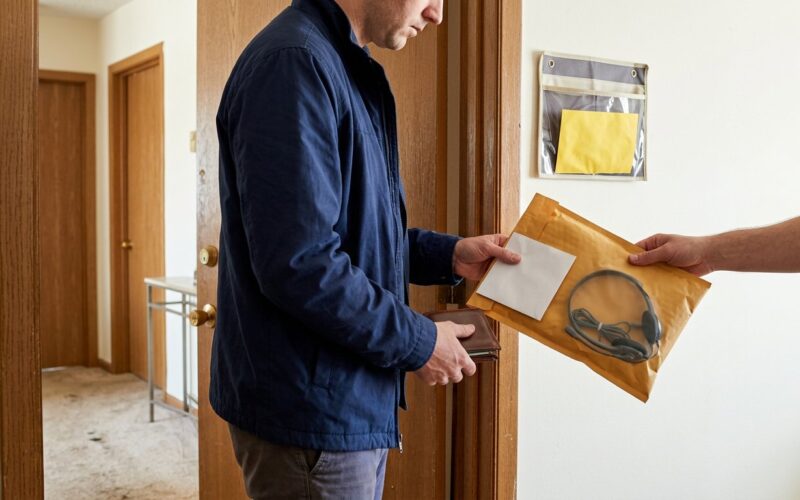
To avoid remote job scams, keep your driver’s license number, Social Security number, and bank account information private until your first day on the job. Before sharing sensitive details, verify the opening through a separate, official company channel.
Remote work offers flexibility, and it’s tempting to move quickly when a promising opening appears. But a polished listing or eager recruiter doesn’t prove a role is genuine. Pressure to pay for equipment, training, or onboarding materials is a reason to stop and reassess.
This guide explains how to verify remote openings with employers, spot common tactics such as fake-check requests and nonexistent roles, and protect sensitive information throughout hiring. You’ll learn which warning signs to watch for, what to do if a recruiter pressures you, and how to assess a job post before sharing personal or financial details.
Key Takeaways
- Keep sensitive identity and banking details private until the right stage of hiring, and pause if a recruiter asks for them too early.
- Verify a remote opening through a separate communication channel tied to the employer before proceeding.
- Recognize common scam tactics, including fake-check requests, upfront payment demands, and roles that do not appear to involve a real hiring process.
- Use Nexxo Recruiting job listings to explore remote opportunities, then assess each opening carefully before sharing personal information.
1. Protecting Social Security, driver’s license, and bank information
To avoid remote job scams, keep your driver’s license number, Social Security number, and bank account information private until your first day on the job. If a recruiter asks for these details earlier, pause and verify both the person and the opening through a separate, official company channel. A request in an application chat doesn’t prove it’s legitimate. Don’t share passwords or account access, either.
Share personal information only when you understand why it’s needed and who will receive it. A photo of your driver’s license can reveal your full name, address, and birth date. Don’t send identity documents, tax forms, or verification codes through an unsolicited email, text, or personal chat. A company logo or familiar job title doesn’t prove who sent the message.
To avoid remote job scams, pause before submitting sensitive details:
- Confirm the recruiter and role through a separate company communication channel.
- Ask why the requested information is needed at this hiring stage.
- Use an employer-controlled process for documents, and never give a recruiter your passwords or verification codes.
Keep a record of what you shared and when. Save screenshots of the job listing, emails, direct messages, and any contract. If you shared bank information, contact your financial institution promptly through its official app or the number on your card. Watch for unfamiliar transactions and follow the institution’s instructions to secure your account.
If you sent money or personal information to a fake employer, stop communicating. If payment or banking details were involved, contact your financial institution immediately. Report suspected employment fraud to the Federal Trade Commission and preserve messages and screenshots as evidence.
2. Verifying openings directly with employers
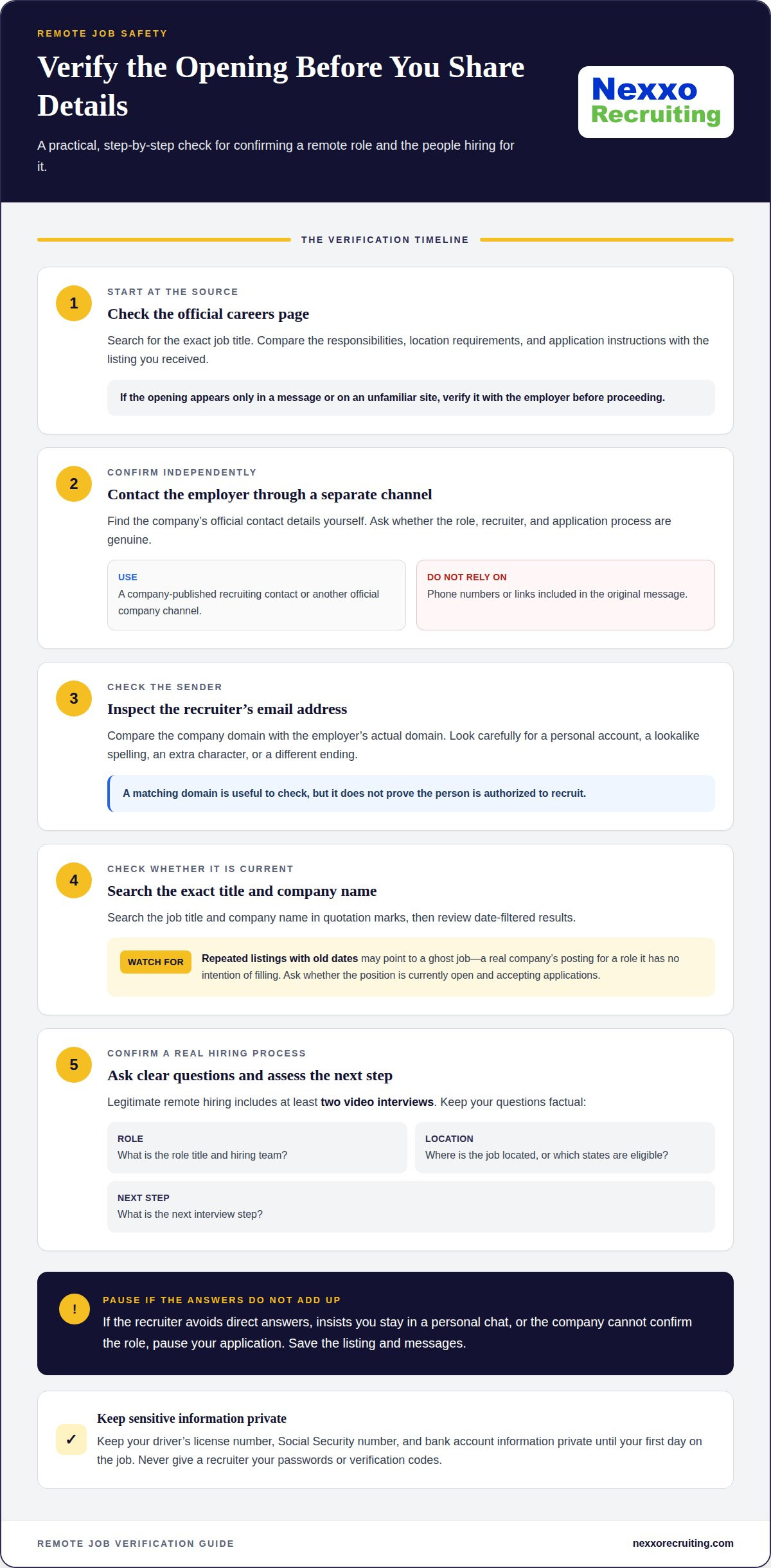
In the United States, verify a remote opening by contacting the employer through a separate communication channel. Find the company’s official contact details independently, then ask whether the role, recruiter, and application process are genuine. Don’t rely on phone numbers or links in the original message.
Start with the company’s official careers page. Search for the exact job title and compare the responsibilities, location requirements, and application instructions with the listing you received. If the opening appears only in a message or on an unfamiliar site, contact the employer’s recruiting team through its official channels before proceeding.
Check the recruiter’s email address carefully. The company domain should match the employer’s actual domain, not a personal account or a lookalike spelling. An extra character or different ending can make an address seem legitimate at first glance. A matching domain is useful to check, but it doesn’t prove the person is authorized to recruit.
Search for the exact job title and company name in quotation marks, then review date-filtered results. Repeated listings with old dates may point to a ghost job: a real company posted a role it has no intention of filling. Ask the employer whether the position is currently open and accepting applications.
- Compare the recruiter’s name and role with information on the company’s official site.
- Use a separate channel, such as the company’s published recruiting contact, to confirm the opening.
- Look for a real hiring process. Legitimate remote hiring includes at least two video interviews.
Keep the exchange factual. Ask for the role title, hiring team, job location or eligible states, and next interview step. If the recruiter avoids direct answers, insists you stay in a personal chat, or the company can’t confirm the role, pause your application. Save the listing and messages so you can compare details if the recruiter contacts you again.
3. Common remote work scams
Remote job scams often imitate hiring or turn a job offer into a payment request. The Better Business Bureau’s 2023 Scam Tracker Risk Report identified work-from-home scams as the most common scams for adults aged 18-44 and the second-riskiest for all age groups. The report recorded a high median loss of $1,995.
A fake-check scam may start with an offer to buy equipment or supplies. The supposed employer sends a check and tells you to purchase items or send money elsewhere. The check later bounces, leaving you responsible for money already spent. Don’t deposit a check and forward funds just because a recruiter tells you to.
Some schemes present themselves as business opportunities rather than jobs. The U.S. Securities and Exchange Commission says pyramid schemes exploit participants through upfront costs and recruitment-driven models, and most participants lose money. Be wary if earnings depend on recruiting others or buying into the opportunity instead of doing clearly described work.
Legitimate employers shouldn’t require you to pay for training, equipment, onboarding materials, or job-related supplies. A request to buy gift cards is another payment demand, not a normal hiring step. Don’t share card codes or send money to secure a position, complete onboarding, or receive a promised reimbursement.
Unrealistic terms can accompany these scams. An offer promising $1,000 weekly for 2 hours of work a day, for example, should prompt careful scrutiny of the duties, employer, and hiring process. A simple task paired with unusually high pay can be bait to get your money or personal information.
Report suspected employment fraud to the Federal Trade Commission and notify your financial institution if money or banking details were involved. Report the post to the platform where it appeared. To report it to the FBI or state authorities, use the relevant agency’s official reporting channel and provide your messages, transaction records, and job details.
4. What are the warning signs of a remote job scam?
Watch for pressure that prevents you from evaluating a role. A message demanding an answer within 1 hour is designed to rush your decision. An offer made within 24-48 hours may also be suspicious, especially if the employer skips meaningful interviews or assessment. Pause instead of letting a deadline dictate what you share or accept.
Pay attention to how the recruiter communicates. Be cautious if they insist on WhatsApp, Telegram, SMS, or voice notes while avoiding a video interview. A request to conduct the entire hiring process through a personal chat app deserves scrutiny. A polished profile or company logo doesn’t prove identity.
Check whether the interview includes a real conversation about the work. A lengthy, detailed assignment directly related to a company’s business can be a warning sign if it’s unpaid and requested before a clear hiring process. Ask what the task assesses and how it relates to the role. Avoid sending work that could serve as usable business output.
- Stop if a recruiter demands an immediate decision before explaining the role.
- Be cautious if every interview happens through personal chat apps, with no video conversation.
- Review unpaid tasks carefully when they require extensive work tied to the company’s business.
- Compare the recruiter’s email domain with the employer’s official domain, and watch for misspellings.
One detail alone doesn’t prove a job is fraudulent, but several warning signs together deserve attention. For example, a rushed offer, a Telegram-only interview, and a request for extensive unpaid work form a pattern worth taking seriously. Pause and verify the opening through the employer’s separate, official channel before sharing documents or accepting terms.
Keep a written record to assess the situation clearly. Save the job post, recruiter messages, assignment instructions, and offer details. If the recruiter changes the role, deadline, or interview method between messages, compare your records and don’t proceed until the inconsistencies are resolved.
Nexxo Recruiting
Nexxo Recruiting lists remote job opportunities for entry-level candidates across data entry, tech, digital marketing, virtual assistance, and customer support. Each listing includes job details and a direct application link, helping you understand the role before applying.
Use a listing as a starting point, not a substitute for verifying the employer and hiring process. Confirm the opening through the company’s official communication channel before sharing sensitive information. This lets you pursue relevant roles while following the safeguards in this checklist.
Contact Nexxo Recruiting if you need help finding remote job listings that fit your search.
Move forward with a clear standard
A safer remote job search doesn’t mean rejecting every opportunity you find online. It means making deliberate decisions at each step, especially if a recruiter changes the process or asks for unexpected information. To avoid remote job scams, let verification guide your pace, not a stranger’s urgency.
Keep your standards consistent: understand the role, know who you’re speaking with, and pause when details don’t line up. Nexxo Recruiting lists remote opportunities, giving you a starting point for finding roles to assess carefully. Your search can keep moving while your judgment stays in control.
When you’re ready to discuss your search, connect with Nexxo Recruiting. Take the next step with focus and confidence.
Frequently Asked Questions
How can I check whether a recruiter’s email address, phone number, or website is legitimate?
Look up the employer’s official domain and phone number independently, then compare them with the recruiter’s details. Check the email address character by character for misspellings or extra words, and type the company domain yourself instead of following a message link. Call the published company number and ask to speak with the recruiter or hiring team. Don’t rely on caller ID alone.
What are common fake check and equipment-purchase scams targeting remote job seekers?
A fake-check scam may ask you to deposit a check, buy equipment, and send leftover funds to a vendor or recruiter. The check may later be rejected, leaving you responsible for the money you sent. Don’t pay a seller or return funds from a check before your bank confirms it has cleared. A legitimate hiring process shouldn’t require gift cards or personal purchases as a condition of employment.
How can I safely share my Social Security number and banking information during hiring?
Share these details only through a verified employer’s secure onboarding process, when they’re needed for a clear employment purpose. Confirm the process with the company through a known contact channel, and check that the page belongs to the employer or its authorized payroll provider. Never disclose account passwords, PINs, or one-time verification codes. If a form requests unrelated details, stop and ask the employer to explain.
How can I compare a remote job offer with the employer’s official careers page?
Compare the offer with the careers page for the exact title, job duties, work location, employment type, and application steps. Check that the role is still open and that the named team or hiring contact matches. If the offer includes different terms, contact the employer through its official channel and ask which details are accurate. Keep a copy of both versions so you can identify specific discrepancies.
How can I find legitimate remote jobs on trusted job boards?
Explore remote openings on Nexxo Recruiting, then verify each role on the employer’s official careers page and confirm it through a separate company channel before sharing sensitive information.