
Remote jobs for beginners are easier to target when you match your skills to the role and can demonstrate clear communication, organization, and confidence with everyday digital tools. Sorting through listings can be frustrating when requirements are vague, so focus on qualifications you can show rather than assuming you need years of experience. Learn what skills and requirements to expect, how they differ across entry-level roles, and how to identify listings that fit your experience.
Key Takeaways
- Entry-level remote roles can include data entry, customer support, virtual assistance, and digital marketing.
- Clear communication, organization, and confidence with digital tools can help you demonstrate readiness for remote work.
- Compare each listing’s duties and qualifications with your experience before applying, then tailor your application to the role.
- A focused CV and relevant job listings can help you target opportunities that match your skills and experience.
Remote Jobs for Beginners
Beginner-friendly remote work often involves defined tasks, online tools, clear instructions, and regular communication. You might respond to customer inquiries, enter information into databases, schedule appointments, or prepare basic marketing content. A role may suit you even without previous remote experience if its required skills match what you can already do.
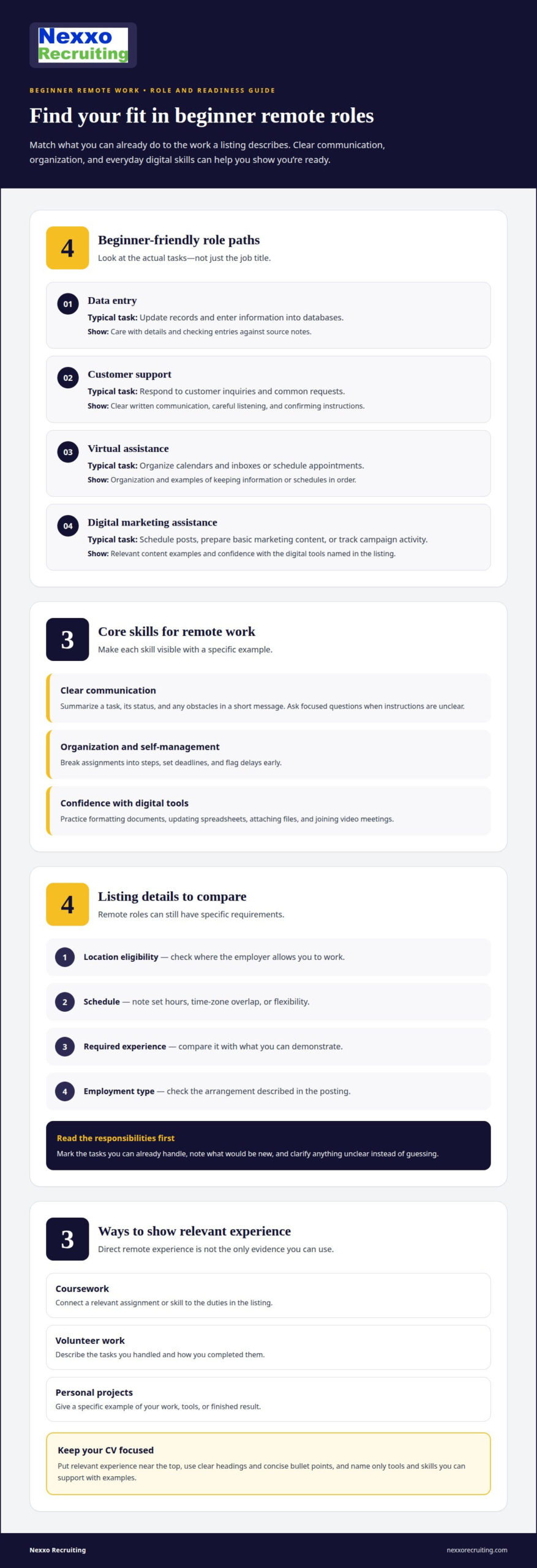
For example, data entry assistants update records, customer support representatives respond to common requests, virtual assistants organize calendars and inboxes, and digital marketing assistants schedule posts or track campaign activity. Duties differ by role, so read each listing instead of treating entry-level jobs as interchangeable. Start by matching your strongest skills to the listed responsibilities.
Turn each listing into a practical picture of the work before you apply. Mark the responsibilities you can already handle, then note what would be new. For each task, consider what the finished work looks like, which information or tools it involves, and how you would confirm it is complete. If a duty is unclear, prepare a brief, polite question for the employer instead of guessing. This helps you assess the fit and gives you a focused way to discuss the role. A job title alone does not show whether the work matches your experience, so compare the actual duties and requirements. Use specific examples to describe what you can do, such as keeping information accurate, responding clearly to requests, organizing a calendar, or preparing content. Connect each example to the listed work, and be ready to explain your steps and how you checked the result. If you have not performed a task in a job, do not present it as paid experience. Instead, describe a related skill and ask what guidance is available for learning the task. Consider whether the schedule, communication style, and responsibilities suit you, and clarify uncertainties before accepting an offer. The U.S. Bureau of Labor Statistics states: Experienced workers usually earn more than beginners. Keep this in mind as you weigh a role’s duties, expectations, and opportunity to use your current skills. A clear match matters more than the remote label alone.
Skills You Need for Entry-Level Remote Jobs
Remote teams rely on clear written updates. Practice summarizing a task, its status, and any obstacles in a short message. Use a calm, specific tone in email and team chat. Listening matters too: confirm instructions before acting, and ask focused follow-up questions when details are unclear.
Build digital confidence by formatting documents, updating spreadsheets, attaching files, and joining video meetings. Check entries against source notes before submitting them. Remote work also takes self-management: break assignments into steps, set deadlines, and flag delays early. Practice through coursework, volunteer tasks, or personal projects, then include a specific example on your CV. Choose a skill from a target listing and strengthen it before applying.
Common Requirements for Remote Jobs
Requirements vary by role, so check each listing for required experience and education. Entry-level postings may accept coursework, volunteer work, or examples of organized tasks instead of direct remote experience. For human resources specialist roles, a bachelor’s degree is typically needed to enter the occupation, according to the U.S. Bureau of Labor Statistics.
Check equipment requirements before applying. Some postings specify a computer, reliable internet, headset, or software, and employers set their own conditions. Your workspace should support focused work and private calls. Check whether the role requires set hours, time-zone overlap, or a flexible schedule. If you lack a listed tool or credential, consider whether it is essential or trainable. Customer support roles may emphasize clear speech, while data tasks may prioritize accuracy.
How to Find and Apply for Beginner Remote Jobs
Search by job title and entry-level terms, such as “remote customer support” or “junior data entry.” Filter listings by location eligibility, schedule, required experience, and employment type. Remote postings can still restrict where you work. Read the responsibilities first, then compare each required skill with evidence from your work, coursework, or volunteer experience.
Prepare the requested materials before applying. Tailor your CV to the role and write a brief application message that connects your experience to its duties. Follow the employer’s submission instructions and include each requested attachment. Track roles, application dates, and follow-up details to monitor responses and avoid duplicate applications. Check that the posting provides clear employer details and an application process.
How to Prepare Your CV for Remote Roles
Tailor your CV to each posting’s duties. Put relevant experience near the top, including coursework, volunteer work, or personal projects. Describe what you did and the result, such as organizing a shared calendar or checking records for errors. Use the employer’s wording for skills you genuinely have, but do not claim tools or experience you cannot support.
Use clear headings, concise bullet points, and a simple layout that’s easy to scan. Include software you can use, such as spreadsheets or video meeting tools, when relevant to the role. Show remote readiness through examples of independent task completion, written communication, or meeting deadlines. Review your CV for typos before submitting. Then browse entry-level remote job listings and target roles that fit your evidence.
Find Remote Job Listings with Nexxo Recruiting
Nexxo Recruiting helps entry-level applicants find remote openings across data entry, tech, digital marketing, virtual assistant, and customer support roles. Compare the listed duties with your current skills. Each job post includes position details and a direct application link, so you can review requirements before applying.
Use those details to narrow your choices. Note required experience, key tasks, schedule expectations, and requested materials. Prioritize roles that match your evidence, then tailor your CV to the listed responsibilities instead of sending the same version everywhere. Contact Nexxo Recruiting with questions about finding relevant listings.
Take the Next Step Toward Remote Work
Your first application does not need to define your entire career plan. Treat it as a practical way to learn what work suits your strengths and preferences. As you explore remote jobs for beginners, adjust your target role based on the tasks you enjoy and the qualifications you can demonstrate. A focused approach can make a demanding job search more manageable.
Choose the type of work you want to pursue, prepare an application that reflects your abilities, and refine it as you gain experience. The Nexxo Recruiting team focuses on organizing job listings, giving you a practical place to continue your search. If you want to discuss finding suitable openings, contact Nexxo Recruiting. Take the next step at your own pace and keep building toward work that fits you.