
Remote real estate data entry jobs focus on keeping property and transaction records accurate and organized. Tasks may include entering or updating client information and checking records for completeness. This overview covers common qualifications, clerical duties, and data-security responsibilities to help you assess the role.
Key Takeaways
- Focus on accuracy, organization, and basic computer skills when assessing your fit for data entry work.
- Expect clerical tasks such as entering and updating property, transaction, and client records.
- Review each remote listing for its responsibilities, qualifications, and work arrangement before applying.
- Browse Nexxo Recruiting’s remote job listings to find opportunities that match your experience and interests.
Data entry skills and qualifications
Remote real estate data entry jobs call for accurate records, consistent formatting, and careful review. The listed U.S. data entry operator role does not require prior experience, so accuracy may matter more than a real estate work history. For example, entering a property address consistently in a spreadsheet and database demonstrates attention to detail.
Strong candidates work carefully with digital records and follow clear instructions. Practice entering sample names, dates, and addresses, then compare every field with its source. Correct spelling, number placement, and field selection matter in transaction records. Familiarity with spreadsheet sorting and basic database navigation can also help you follow an established workflow.
- Accuracy: Distinguish similar street names, unit numbers, and client names before saving records.
- Organization: Label files consistently, using clear names such as “property records” or “closed transactions.”
- Computer fluency: Move between spreadsheets, databases, email, and documents without losing your place.
- Communication: Flag a missing date or conflicting address instead of guessing or changing it silently.
The operator duties described focus on data entry. Don’t assume the real estate label means a particular credential is required. Review each posting’s qualifications and responsibilities, especially if it describes work beyond entering and maintaining records.
Before applying, match your experience to the task list. Name the systems you’ve used, such as spreadsheets or customer databases, and give an example of checking a record. If you lack property-sector experience, highlight accuracy from comparable work, such as order entry, scheduling, or maintaining contact records. Keep examples specific and connect each skill to a task in the posting.
Administrative and clerical duties
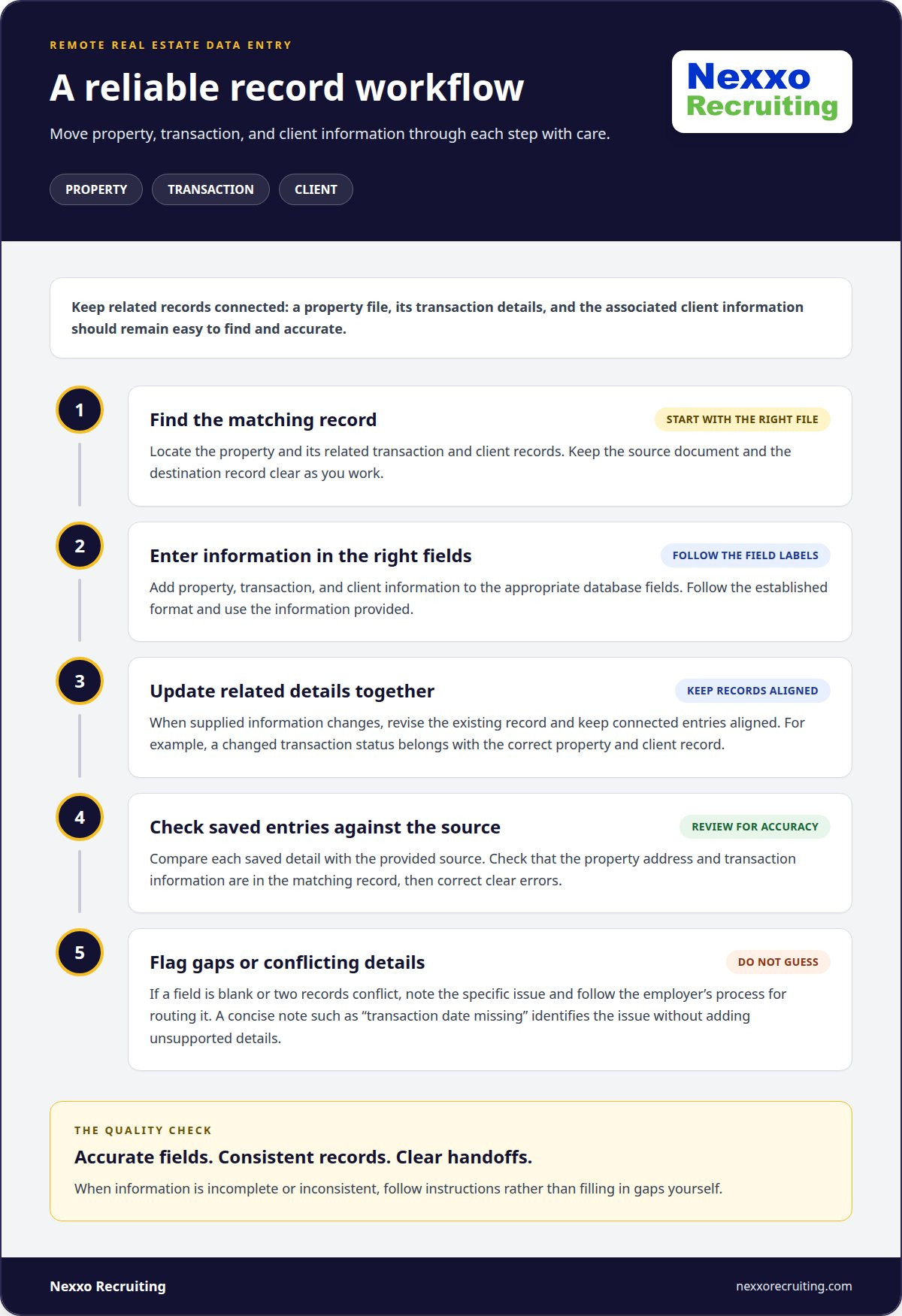
Remote real estate data entry work involves organizing property, transaction, and client information in a database. A record might link a property file to its transaction details and associated client. Your clerical tasks may include entering new information and updating records when details change. Clear, consistent entries help staff find the right record during routine work.
When updating records, pay attention to how the fields relate. For example, a changed transaction status belongs with the correct property and client record, not a similarly named file. Follow the database’s field labels and established format. If information is incomplete or inconsistent, don’t guess to fill the gaps. Accurate handling keeps records useful to the people who rely on them.
- Enter records: Add property, transaction, and client information to the appropriate database fields.
- Update details: Revise an existing record when supplied information changes, keeping related entries aligned.
- Organize files: Use the assigned record structure so a property and its transaction details remain easy to find.
- Review entries: Compare saved information with the provided source and correct clear errors.
Clerical work can also involve transferring information from documents into a database. For example, a property detail in a transaction document may need to be entered in its matching record. Keep the source and destination clear as you work. This helps prevent mix-ups between properties or clients and makes corrections easier to trace.
Remote workflows depend on clear handoffs. If a field is blank or two records conflict, note the specific issue and follow the employer’s instructions for routing it. A concise note such as “transaction date missing” identifies the next step without adding unsupported details. These habits help maintain reliable property and transaction records.
Evaluating Remote Job Listings
Read each posting as a description of a specific role, not simply a remote-work label. A real estate data entry operator listing may name property records, transaction details, and client information. Check whether the duties match the work you want. A general data entry title may describe a different industry or workflow.
Next, identify the employment arrangement and schedule. A listing may describe a full-time operator role or a part-time remote data entry position. These details affect how the job fits your availability. Look for stated hours, time-zone expectations, and whether the employer identifies the role as full-time, part-time, or freelance. Don’t assume “remote” means flexible hours.
- Match the duties: Confirm the description includes real estate records, database updates, or transaction support.
- Review qualifications: Separate required skills from preferred experience, such as familiarity with spreadsheets.
- Check the work arrangement: Note whether the position is full-time, part-time, or freelance.
- Look for application details: Find the requested materials, submission method, and any stated hiring steps.
Specific details make it easier to judge whether a posting is relevant. For example, a description that names property and transaction records gives clearer direction than one that only says “data entry.” Compare the listed duties with your experience, then tailor your application to those tasks. Include a concrete example, such as maintaining accurate customer records or updating a database.
Finally, note what the listing says about information handling and remote processes. A role involving client records should explain its accuracy expectations and data-security policies. If the posting outlines a process, such as submitting an application and completing an interview, follow those steps in order. This helps you focus on roles with clear duties and practical requirements.
Remote real estate data entry responsibilities
Remote operators manage property, transaction, and client records through digital databases. The responsibility goes beyond typing: check every entry for accuracy and completeness. For example, compare a property address and transaction detail with the information provided before saving changes. Correct errors instead of carrying them into later records.
Data quality depends on careful review and consistent handling. If a transaction record has a missing date or conflicting property detail, flag the issue instead of guessing. Follow the employer’s process for corrections and updates. This helps prevent unclear information from becoming an unsupported database entry.
- Verify fields: Check names, addresses, and transaction details against the supplied records.
- Correct errors: Fix clear typos or misplaced information, then review the saved entry.
- Protect information: Keep client and property records confidential and follow data security policies.
- Escalate conflicts: Note the specific mismatch, such as different addresses, and route it through the assigned process.
To spot and avoid job scams, look for a clear employer identity, specific duties, and a consistent application process. Be cautious if a supposed recruiter requests sensitive personal information before explaining the role, or sends messages that don’t match the listed employer.
Remote work adds a handoff challenge: colleagues may rely on your updates without seeing your screen. Use concise notes to explain what changed, such as correcting a transaction status based on supplied documentation. Keep source information available according to company procedures. Before finishing a batch, review saved entries for omissions, duplicates, and mismatched fields. These steps make your work easier for the next person to use and help maintain complete property and transaction records.
A consistent entry routine helps maintain accuracy and completeness. Work through the available fields in order, checking that each value matches the information supplied and that required details aren’t missing. When a value can’t be confirmed, preserve that uncertainty rather than making an assumption. After correcting a discrepancy, make sure the revised information remains consistent across the record. The goal is not just to make a record look finished, but to leave it accurate, complete, and supported by the information provided.
Nexxo Recruiting
Nexxo Recruiting helps remote job seekers explore job listings, including Data Entry opportunities. Browse its listings when you’re starting your search or considering entry-level work. Each post includes job details and a direct application link, taking you from reviewing a role to its application process.
Use each listing’s details to decide whether an opportunity fits your goals. Compare the stated duties with the work you’re prepared to do, then review the qualifications and application instructions. For example, if a listing describes database entry, consider whether those tasks match your experience. Read the full post before applying rather than relying on its title alone.
Nexxo Recruiting presents remote opportunities with job details and direct application links. Its listings cover Data Entry, Tech, Digital Marketing, Virtual Assistant, and Customer Support roles. This makes it easier to assess openings by their stated duties and qualifications, not just their titles. Listings help you find opportunities to consider, but don’t promise a hiring outcome.
When you’re ready to apply, follow the instructions in the specific job post and use its direct application link. Keep track of roles that interest you, the skills each requests, and any application steps described. This simple record helps you manage opportunities without mixing up employer requirements or application details.
If you have a question about the listings, you’re welcome to contact Nexxo Recruiting at your convenience.
Frequently Asked Questions
What remote real estate data entry jobs are available in the United States?
U.S. openings can include data entry operator, data entry specialist, and clerical roles that support real estate records. Titles vary by employer, so search related terms when reviewing openings. Some positions are full-time, part-time, or freelance. Read each posting for the work arrangement and responsibilities, since a general data entry title may cover records outside real estate.
What qualifications and skills do remote real estate data entry jobs require?
Employers commonly look for accurate typing, basic spreadsheet or database skills, organization, and clear written communication. You may need to follow field labels, enter information consistently, and report unclear records without guessing. The listed data entry operator role does not require prior experience, though employers set qualifications for each opening. Review the specific requirements before applying.
Where can I find legitimate remote real estate data entry job listings?
Nexxo Recruiting lists remote job openings, including Data Entry roles, with position details and direct application links. Before sharing personal information, review the employer name, duties, and application instructions in each post. Be cautious of messages using a different employer name or requesting sensitive details before explaining the position. Apply through the process stated in the listing.
Which companies hire remote real estate data entry clerks or specialists?
Employers may include real estate businesses and organizations that manage property or transaction records. Company names vary as openings are posted. Nexxo Recruiting provides job-specific details and direct application links so you can identify the employer behind an opening. Check each post’s title and description to distinguish a real estate role from general data entry work.
What software and tools are commonly used in real estate data entry jobs?
Common tools include spreadsheets, databases, email, and documents for entering, organizing, and checking records.